



MUFG Bank has launched a full-scale initiative to transform client communication in its wealth management business for high-net-worth clients. By adopting the technology of Symphony, a U.S. company that provides a secure communication platform purpose-built for the financial industry, the bank aims to modernize a wealth management sales practice that has, until now, relied primarily on email and phone calls.
This article presents a roundtable discussion featuring Hideyuki Yoshida, who heads Sales and Account Management in Japan for Symphony, and representatives from MUFG Bank’s Wealth Management Strategy Division and Digital Strategy Division, as well as MUFG Innovation Partners (MUIP), which brought together MUFG Bank and Symphony.
In June 2019, MUIP, together with Standard Chartered, participated in a $165 million funding round for Symphony.
This capital relationship later became one of the deciding factors behind MUFG Bank’s adoption of Symphony’s Messaging platform.
A communication platform built for the financial industry
First, some background on Symphony.
Symphony was founded in 2014, when major Wall Street financial institutions formed a consortium to build a secure chat platform they could use to communicate with one another. Because it originated from the financial industry’s requirements, the platform is now used by more than 1,400 institutions, including the world’s ten largest investment banks.
Symphony’s Yoshida emphasized that what sets the company apart from general-purpose business chat tools is that it was designed from the outset around the strict compliance and regulatory requirements unique to the financial industry, rather than as a general-purpose communication tool.

Symphony offers a secure, finance-specific information platform that allows financial institutions, investors, and market participants around the world to connect safely and operate more efficiently. It brings together messaging, voice communication such as trader voice, directory services, and data analytics on a single secure network. Through this, Symphony is evolving into comprehensive digital infrastructure for the financial markets. (Yoshida)
At the same time, this design philosophy also limits external touchpoints.
General-purpose business chat tools typically address risks such as information leakage and the absence of audit logs by cutting off external connections altogether, forcing organizations into silos. Symphony Messaging’s “federation” capability removes this constraint while preserving security, enabling safe connections to external platforms.
Specifically, Symphony’s technology allows consumer-facing channels such as LINE, WhatsApp, WeChat, and SMS to be incorporated into a financial institution’s operations in a way that remains fully compliant with regulation. It leaves the customers’ preferred app unchanged, while giving bank staff a controlled, auditable environment in which to communicate through the customer’s preferred app.
This ability is a key reason Symphony Messaging has been widely adopted by global investment banks.
LINE as the top priority, and the decision to adopt Symphony Messaging
The starting point to adopting Symphony Messaging was a pressing challenge facing the MUFG Bank’s wealth management business on the ground. Masaru Mikami, Managing Director, Head of Planning Department within the Wealth Management Strategy Division, recalls the origin of the initiative.
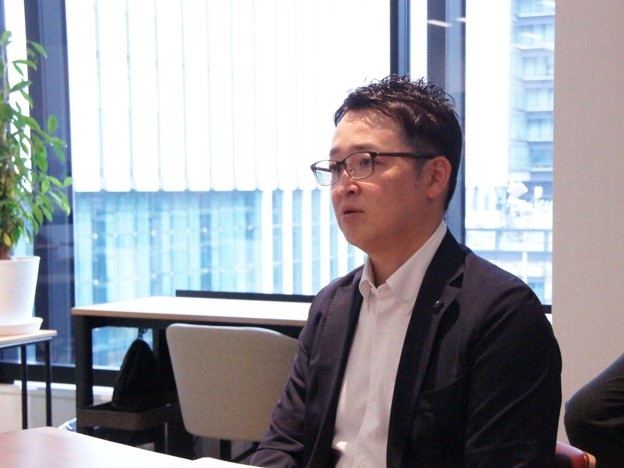
Until now, our clients and their relationship managers had really only been connected by email and phone, and communication wasn’t always sufficient. Our initial idea was that introducing chat could give us faster, more responsive contact with clients. (Mikami)
While MUFG Bank already had internal business communication tools, few clients had installed those apps themselves, resulting in a significant limitation for a B2C use case.
The bank concluded that for its domestic high-net-worth clients, LINE was the most important channel, and Symphony emerged as the natural choice on that basis. Using Symphony’s LINE Connect feature, the client-facing interface remains LINE, while all internal management takes place through the Symphony Messaging app. Mikami describes this as getting “the best of both” communication tools and calls it one of the deciding factors in the decision to adopt Symphony Messaging.
Marina Yoshitaka, of the Wealth Management Strategy Division, evaluated Symphony from a security standpoint.

MUFG Bank maintains particularly high information security standards among financial institutions, with extensive requirements from each risk-management department. Symphony Messaging’s functionality matched these requirements point by point, Yoshitaka says.
When using chat, we can set restricted words and rules in advance for bank staff, creating a system that prevents inappropriate communication with clients before it happens, while administrators can finely control access permissions. These security standards matched MUFG Bank’s own requirements very closely. (Yoshitaka)
Given the importance of a system like this, building it in-house was also considered an option. Development speed has improved dramatically amid recent advances in AI. Even so, Mikami notes that in-house development was never seriously on the table: “Building it ourselves would have meant slower development and a slower rollout, so we wanted to use an external SaaS solution from the start.”
The final deciding factor in the adoption decision was MUIP’s investment in Symphony. The capital relationship dating back to 2019 gave the bank a deep understanding of the company, providing a foundation of trust for adopting a foreign company’s technology at a core client touchpoint.
Three years in the making: overcoming the barriers financial institutions face

The path from the adoption decision to full implementation was far from smooth. Yoshitaka first pointed to the difficulty of building internal consensus at the bank.
Moving from traditional channels like phone and email to a new channel like LINE was a genuinely high hurdle, and it took a great deal of effort. We had to work through how to ensure safety from an information security and compliance risk standpoint, and the process of getting stakeholders across the bank to understand and accept this was very difficult at first. (Yoshitaka)
Yui Miura describes the challenges on the contracting side.
The Wealth Management Strategy Division had little experience contracting with foreign companies, so even basic matters such as payment procedures took time to confirm. In addition, because the governing law was not Japanese law but New York State law, the team had to work closely not only with the risk-management departments but also with the Legal Division. The project was further complicated by the fact that the solution combined Symphony Messaging with functionality from LINE Yahoo, rather than using Symphony Messaging alone.
Even launching a single chat channel required us to go through close to ten internal procedures at the bank. Beyond simply following the standard process, we had to secure risk sign-off through exception approvals and build understanding precisely because this was a new system. That was where we faced real difficulty. (Miura)
According to Kyoichi Tanoue of the Digital Strategy Division, the project spanned roughly three years overall, with discussions with Symphony alone taking about two years.

Honestly, it was a difficult process. We were meeting on a near-weekly basis, working through the details, and I’m very grateful to the team at Symphony for staying with us and never giving up along the way. I think Symphony Messaging’s strength is its ability to connect in a product-neutral way with channels such as LINE, WeChat, and WhatsApp, depending on the country or region. Since MUFG needs to think globally, I believe there is real potential for this Japan deployment to expand around the world. (Tanoue)
Symphony, for its part, does not see this collaboration as simple deployment support.
Yoshida notes that if every stakeholder’s requests were accommodated and functionality were locked down accordingly, the tool would become difficult to use for both relationship managers and clients alike. Working through that trade-off, in close and repeated discussion with the Wealth Management Strategy Division team, the two companies built a set of best practices from the ground up.
From building connections with affluent clients to the next step: AI agents

High-net-worth clients tend to be busy, and many are business owners, so simply creating a touchpoint by phone or email can require considerable time and effort.
By using chat to create touchpoints efficiently, relationship managers gain more time to think through what to propose once they do connect with a client — time to really focus on the client. We believe there is real value in creating this kind of time to focus on the client. (Miura)
Even before the formal rollout, requests to adopt the system had already come in from staff at other branches, reflecting high expectations in the field.
Overseas, at institutions such as HSBC, which began similar initiatives five or six years earlier, what started as a small-scale rollout for scheduling appointments has since become deeply embedded in day-to-day operations — extending to sending prospectuses and even executing orders over WhatsApp with two-factor authentication in place.
Japan’s rollout is only just getting started along that same path. Looking ahead, the bank plans to expand both the number of users and the range of use cases.
Mikami envisions scaling adoption to roughly 6,000 relationship managers and professional staff and, reflecting the group-wide nature of MUFG’s wealth management business, sees eventual expansion into the trust banking and securities businesses as the ideal outcome.
Looking further ahead still is the use of AI agents.
In 2026, at its annual conference “Symphony Innovate,” Symphony announced its “AI Agent Studio,” which allows financial institutions to build their own AI agents under their own governance.
Yoshida describes a vision in which an AI agent sits alongside the client in the same chat room, drawing on internal data and research reports to draft responses to specialized inquiries, with the relationship manager reviewing the draft before it is sent.

In the past, whenever bank staff received a question, they had to look it up in a database, spending a great deal of time on tasks that included compliance and legal considerations. By giving each relationship manager an AI agent as a kind of digital buddy, we can free up more of their time to focus on the client — and in doing so, eliminate friction in communication altogether. (Yoshida)
As a result of sustained effort by all parties involved, Symphony Messaging has also been adopted for global use within MUFG’s Markets business, alongside the wealth management rollout.
The recent contract was for a small-scale start within the Markets Engineering Office, but I understand it will be rolled out on a common global platform so that Markets divisions worldwide can use it. In the Markets Engineering Office, I understand the team also plans to begin work on automated workflows and bot development using our API integration. (Yoshida)
The future of financial communication in the AI era

Through this roundtable, we were able to look back, together with those directly involved, at MUFG Bank’s collaboration with Symphony to advance its communication strategy for high-net-worth clients.
Financial institutions today are expected to combine a high degree of trust and confidentiality with the speed and personalization needed to deliver proposals that resonate with each client’s individual values.
Achieving this combination requires technology, and this collaboration stands as clear evidence of the kind of communication strategy now required at a high level as the AI era begins to unfold.
Its adoption within the Markets division, where security and speed requirements are even more demanding, further underscores Symphony’s versatility and track record.
Using the Japan deployment as a model, the initiative is set to expand across the group and, ultimately, globally.
Having begun with wealth management and the Markets division as its two pillars, the collaboration between MUFG Bank and Symphony has the potential to fundamentally transform how financial institutions communicate with their clients.
