


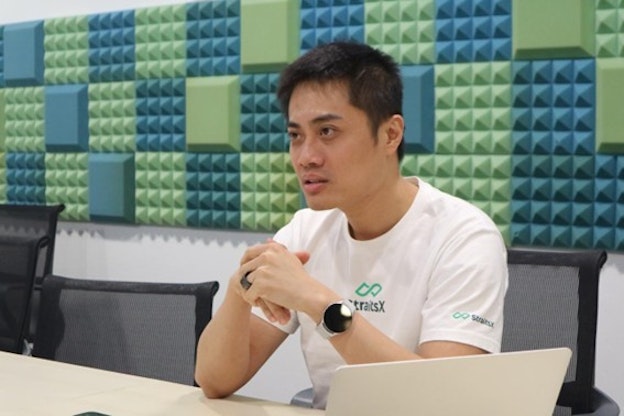
StraitsX from Singapore is developing a stablecoin-native payment infrastructure leveraging blockchain technology. It aims to drive awareness and adoption of digital currencies in the region through practical use cases such as international remittances and tourist payments.
The company was founded in 2016 as Xfers by then CEO Tianwei Liu and CTO Victor Liew driven by a shared concern over the fundamental challenges facing Southeast Asia’s payment infrastructure.
Today, StraitsX operates as part of Fazz, after Xfers merged with PayFazz, an Indonesian company focused on financial inclusion to form Fazz Financial Group.
Both companies are Y Combinator alumni and shared a common vision of expanding financial access across Southeast Asia.
StraitsX now fronts the brand and operates as the group’s digital asset and stablecoin-native payment infrastructure, powering regulated, borderless payments and settlement for crypto-native and traditional institutions.
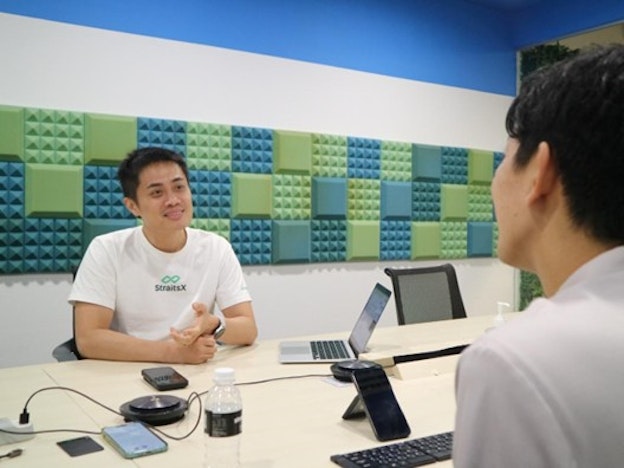
Around 2015, after working in the Bay Area for six years, I returned to Southeast Asia and found there was no way to make peer-to-peer payments. A friend asked me to buy a Kindle, but there was no (convenient) payment method available. Bank transfers took more than two days, and we couldn’t even tell who had sent the money. (Tianwei)
StraitsX aims to optimize the entire payment process—from stablecoin issuance to cross-border payments and card issuance—providing a reliable, regulatory-compliant infrastructure that seamlessly integrates stablecoins into the lives of consumers and businesses.
Entry into the stablecoin business after lengthy dialogue with the regulators
The company in its Xfers days initially provided payment API services and in 2019 obtained an e-money license from the Monetary Authority of Singapore (MAS)—a first for a fintech company. This achievement paved the way for its stablecoin business.
After obtaining the e-money license in 2019, we saw an increase in customers from crypto exchanges. They were blockchain-native and needed solutions that could settle on-chain. So we proposed to MAS that we wanted to issue e-money on the blockchain. (Tianwei)
After nine months of discussions with MAS, StraitsX officially launched XSGD, a Singapore dollar-backed stablecoin, under the StraitsX brand in 2020. The forward-thinking stance of the Singapore government made this innovation possible.
Between 2021 and 2022, MAS reached out to us and said they wanted to work together to make stablecoins practical. That’s how Project Orchid started, eventually leading to a full-fledged stablecoin licensing regime. (Tianwei)
Since then, StraitsX has added XUSD, a USD-pegged stablecoin launched in 2024, alongside its XSGD offering. StraitsX is accelerating the global expansion of its issued stablecoins through listings on Coinbase and other major exchanges.
Real-time settlement — solving the challenges of traditional cross-border payments
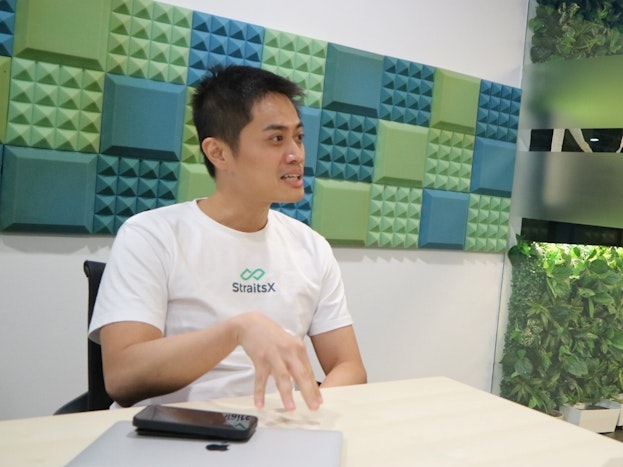
Traditional international payments were often able to confirm card transactions in real time, but actual fund settlement could take days or even weeks, creating liquidity and FX risk issues for merchants.
In international payments, confirmation and actual fund movement are separate processes. When you tap a Visa card at a café, confirmation is instant, but settlement can take days. Merchants face liquidity problems and bear FX risk until they receive the funds. (Tianwei)
Stablecoins help to solve this structural problem by integrating communication and settlement through blockchain technology.
Stablecoin payments complete communication and settlement at once. When an Alipay Plus user scans a Grab merchant’s QR code, Alipay uses yuan or Malaysian ringgit to buy Singapore dollar stablecoins and sends them in real time to the merchant’s blockchain address. (Tianwei)
This mechanism enabled seamless payments for tourists in Singapore starting in 2023 through a partnership with Grab. Payments are completed instantly, and merchants receive funds as quickly as the same day or the next business day.
Small team, global reach — the benefits of being AI-native
One of StraitsX’s unique features is its ability to process $30–40 billion annually with a team of just over 200 people, thanks to aggressive use of AI for efficient operations. Beyond operations, purpose is a key driving factor for employees at StraitsX. Tianwei emphasizes hiring self-driven talent and always asks candidates why they want to work at StraitsX.
In most cases, working here meansworking twice as hard, and possibly not getting instant returns. It’s important to answer why you still want to join. People who succeed here want to make an impact on the financial industry. (Tianwei)
Tianwei himself started with zero experience in banking or payments. After working as a software engineer at Amazon, he joined Y Combinator in 2016 and founded Xfers, armed only with a willingness to learn and execute.
In March 2021, Xfers received a $30 million strategic investment from PayFazz, leading to the formation of Fazz Financial Group. In September 2022, the combined group entity raised $100 million in Series C funding from prominent VCs such as Tiger Global, DST Global, B Capital, and Insignia Ventures Partners.
In 2023, StraitsX received funding from Japan’s NTT DOCOMO, INC., followed by a $10 million investment from UQPAY in 2025, to expand operations from Singapore, Indonesia, Thailand, and Vietnam to the rest of Southeast Asia and Japan.
A key focus is expanding QR code payment networks. Following Grab, StraitsX plans to roll out in Indonesia via Fazz’s agent network and expand to the Philippines and Malaysia through each market's local real-time payments infrastructure.
Following our partnership with Grab in Singapore, we expect to announce launches in Malaysia and the Philippines soon. In Indonesia, we’ll connect through PayFazz, and in Thailand via PromptPay, Malaysia via DuitNow, and the Philippines via InstaPay. (Tianwei)
Collaboration with MUFG — unlocking opportunities in Japan
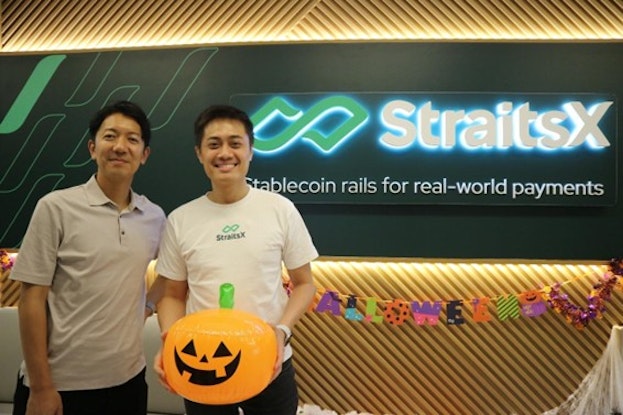
Tianwei cites trust in the MUIP team as one reason for welcoming them as an investor. He values long-term, strategic investors who provide appropriate support for business growth.
Another major reason is the potential for collaboration in the Japanese market. With the U.S. passing the GENIUS Act (Stablecoin Regulation) and Japan advancing its regulatory framework, StraitsX sees opportunities to leverage its experience in Japan.
Regulated businesses take time. Even if you want 10x growth next month, it usually takes 3–4 years to get there. Based on our track record in Singapore, we see great potential to issue and operationalize stablecoins in Japan with MUFG. We’ve run this business for five years, so we deeply understand revenue structures, common pitfalls, and key focus areas. (Tianwei)
Specifically, StraitsX envisions expanding scan and pay networks in Japan. HIVEX, a blockchain-powered interoperable payments network based in Taiwan and the U.S., is working on connecting WeChat Pay and PayPay merchants, and StraitsX is exploring collaboration with the company as a stablecoin issuer.
In Japan, we aim to enable Grab users to pay at PayPay merchants. We also want to build banking relationships with MUFG in Japan and establish a system to receive Japanese yen. (Tianwei)
StraitsX’s bold pursuit of technology and innovation is poised to democratize stablecoin payments from Southeast Asia to the world.
