


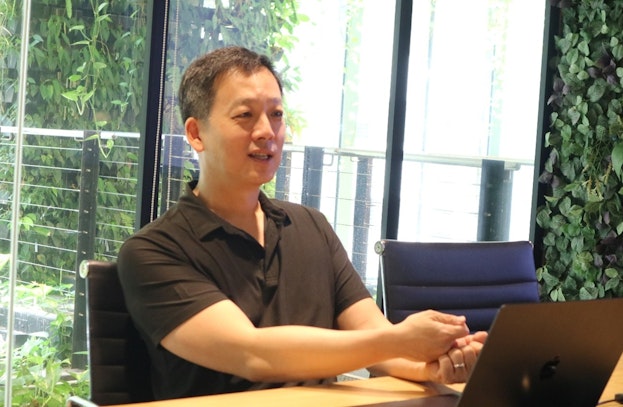
Singapore-based Endowus, founded in 2017, has grown into Asia's largest independent digital asset management platform. The company, which is backed by MUFG Innovation Partners (MUIP), has exceeded $10 billion (approximately ¥1.5 trillion) in assets under management (AUM) and generated over $1 billion in returns for its clients. We spoke with Samuel Rhee, Endowus's Co-Founder, Chairman, and Group CIO, about its founding story and outlook for the Japanese market.
Founded from "a service we wanted to use ourselves"
Endowus was founded by Sam and co-founder and CEO Gregory Van (Gregory) in Singapore. Sam possesses over 30 years of industry expertise and nearly 20 years of institutional investment experience as former CEO and CIO of Morgan Stanley
Investment Management Asia, while Greg was part of UBS's investment banking division, specifically the Private Fund Group.
The starting point for founding the company was frustration. There were many issues with how wealth management was being done in Singapore, Hong Kong, and across Asia. Having worked with institutional investors, we knew better ways to invest, but existing service providers didn't give us access to the products we wanted or provide the necessary advice. Furthermore, we felt the costs were much too high. (Sam)
Sam believes that the foundation of a successful wealth management business boils down to three elements: advice, access, and cost. The company focused particularly on investment opportunities leveraging Singapore's public pension system, the Central Provident Fund (CPF). While the CPF allows a significant portion of pension assets to be invested in financial markets, before Endowus, no provider existed that offered high-quality advice through digital means.
We built a service we ourselves wanted to use. Many employees who joined later were actually Endowus customers themselves first. Being users ourselves made the business opportunity crystal clear. That became our strongest driving force. (Sam)
Bringing institutional-grade services to individuals
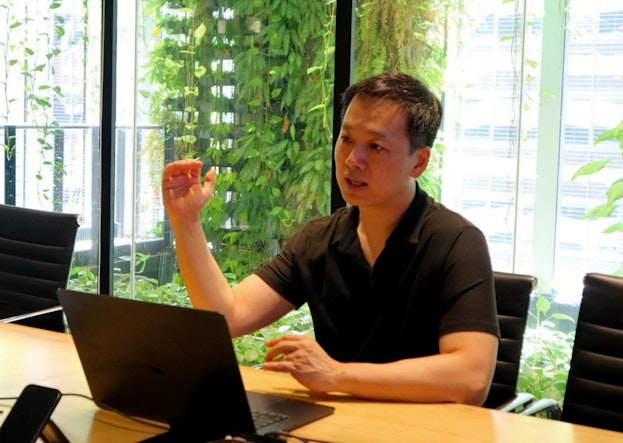
The company's service platform began with a core advisory service using pre-built portfolios. This approach involved deploying evidence-based systematic investing and institutional investment frameworks for individual investors. Concepts like advisory-led, goal-based investing, strategic asset allocation, and global diversification were not yet commonplace in Singapore or Hong Kong at the time. Consequently, Endowus developed and provided extensive educational content to help investors understand why they should invest this way. The company then offered solutions, investment products, and access to funds to enable investors to properly implement these ideas.
Today, it has evolved into a platform that centrally manages an individual or family’s investments from all financial funding sources—including CPF, SRS (Supplementary Retirement Scheme), cash, private markets, and alternative investments. All of this is provided in a cutting-edge technology stack and app that gives the best client user experience in the wealth technology space.
Many competitors focus on product development like quant funds, claiming their algorithms are superior as robo-advisors. But for us, what mattered was engaging with customers, providing advice, earning trust, and building relationships. Supporting customers to invest the right way and accompanying them throughout their lives. (Sam)
The company cites its business model as a key differentiator. While many competitors focus on ETFs, Endowus deliberately chose unit trusts (investment trusts) and mutual funds for pensions and institutional clients.
Stock trading is easier for customer acquisition and scaling, but we intentionally distanced ourselves from it. We wanted to avoid a volatile, transaction-based business. By choosing funds and pensions, we've built a moat others lack. Pensions are a unique domain only Endowus handles, making us the first digital advisor catering to Singapore's CPF and SRS. (Sam)
Low churn rates driven by customer behavior change
Endowus’s defining strength is its exceptionally low churn rate. Even during major market fluctuations—the pandemic, the 2022 bear market, and 2025 April's market crash—customers consistently continued investing weekly and monthly. In the 7-8 years since its founding, it has never recorded net outflows on a monthly basis.
We work to ensure we thoroughly align with our clients' investment expectations and help them better understand their investment approach. Even after they begin investing, we remain by their side as trusted advisors, continuing to provide guidance. This changes how our clients act. They shift from a transactional, short-term, tactical perspective to strategic, goal-based investing. By focusing on 'why invest' rather than 'how to invest,' we align our interests with our clients and build long-term relationships based on trust. (Sam)
As proof that the company's business model works, Sam cited two figures: well over $1 billion in gains generated for clients and more than $300 million in fees clients saved compared to competitors. Out of $10 billion in assets under management, $1 billion comes from actual returns, demonstrating how high customer satisfaction leads to long-term relationship retention.
Employees participate in management as shareholders
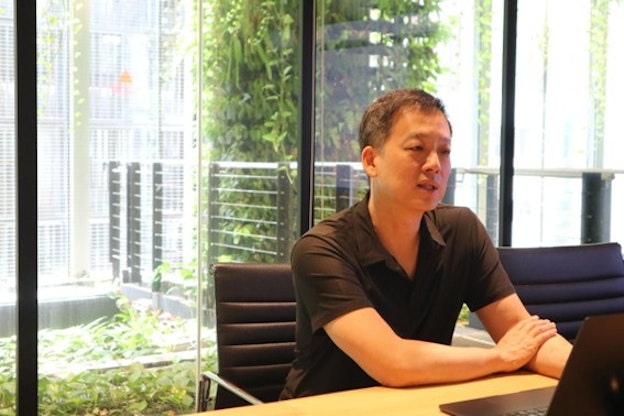
When asked about the company's organizational culture, Sam highlighted four key elements.
First, alignment with the mission and vision. While Singapore's financial sector is the largest employer with a talented workforce, many feel frustrated by corporate work culture. Endowus hires individuals who resonate with its values, fostering passion for their work.
Second, high delegation of authority, accountability, and a flat organizational structure. There are no private offices, and Sam himself doesn't have a dedicated desk. This open environment, where anyone can sit wherever they like, enables efficient communication and agile decision-making.
I don't have a private office. I don't even have a dedicated seat. If I'm away, someone else can use my seat. This delegation of authority, accountability, and flat structure enables highly efficient communication and rapid action, creating an agile nature. When you have capable, passionate people who are empowered and held accountable, you get high-performing teams and individuals who grow within their roles. (Sam)
Third is the ownership mindset. Sam and Greg intentionally onboard employees as owners and shareholders of the business. Investment banks like Goldman Sachs and Morgan Stanley, consulting firms like McKinsey, and asset management companies have historically thrived as successful partnership-based businesses because the biggest contributors to growth are also owners of the business.
We don't just give away stock for free; we encourage employees to buy shares with their own money. Most of our long-tenured senior members have purchased company stock from their personal savings. They aren't just acting like owners—they actually are owners. This ownership mindset is incredibly powerful and represents a true differentiator from other companies. (Sam)
Fourth is the thorough implementation of customer-centricity. The company's business revolves entirely around its customers; it cannot rely on other partners or new ventures. Sam emphasizes that everything—from talent acquisition to technology development—is done to provide better service to customers.
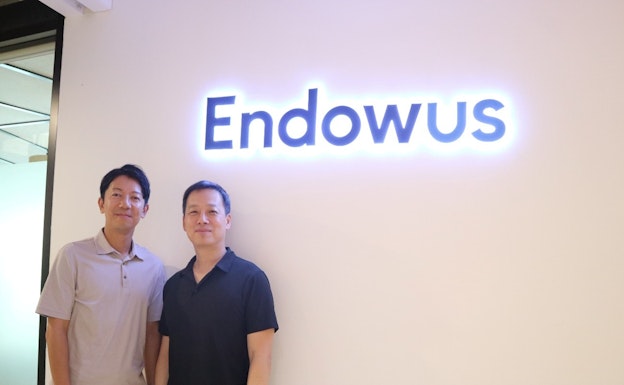
Expectations and challenges for the Japanese market
Regarding future growth, Sam highlights several tailwinds: long-term rising financial markets, increasing assets and wealth transfer to the next generation in Asia, accelerated digital transformation, and an expanding pension market. The company has positioned itself to capitalize on all these trends.
Currently based in Singapore and Hong Kong, the company recorded a 150% year-over-year increase in Hong Kong customers and a threefold rise in assets under management. It plans to expand into other Asian markets over the next 5 to 10 years.
Regarding the Japanese market, Sam also holds high expectations.
I believe Japan is now entering a period of transformation. It has faced many challenges over the past few decades, but it is now addressing them in the right way. This is reflected in market returns. 2023 was strong, last year saw some stagnation, but this year has seen a recovery. While there are still structural challenges, the growth opportunities exist and a large capital pool locally with valuations that are not stretched. So there is no reason why Japan shouldn't perform well. (Sam)
At the same time, he recognizes challenges unique to the Japanese market.
The Japanese wealth market is also a very difficult one. It's a market that doesn't easily accept new entrants or change, and the costs of customer acquisition and scaling the business are high. Strong partnerships are needed across all fronts—products, operations, technology, infrastructure, regulation—and none of these are easy. It will likely require significant capital investment and substantial resources in terms of talent. It might be a bit premature for us right now. (Sam)
Regarding MUFG's acquisition of WealthNavi, he described it as an extremely exciting development and expressed a desire for Endowus to eventually enter the Japanese market through a partnership with the MUFG Group.
The company received investment from MUIP in August 2023 and is accelerating its expansion in Singapore and Hong Kong. Regarding the relationship with MUIP, Sam emphasized that aligning expectations is crucial not only with customers and employees but also with shareholders. He noted that MUFG and MUIP demonstrated the strongest alignment across strategy, timeline, and business understanding compared to many other financial institutions. Also, the MUIP team was very quick and responsive in helping the company strategically and making great connections. They are investors with whom we can bounce ideas and share strategy, and receive great feedback and thoughtful responses. The presence of shareholders who share a long-term perspective—building the business over seven or ten years rather than demanding immediate returns within two—is helpful in supporting the company's growth.
It's often said that going from zero to one is the hardest part, but growing from one to ten was equally, if not more, difficult. And next is ten to one hundred. This is where the fun begins. (Sam)
The company aims for further growth across Asia by stacking new products, new solutions, new funding sources, and new market segments and new geographical opportunities. We look forward to seeing when the day arrives for its entry into the Japanese market.
