



I participated in a panel titled “The New Rules of Capital—From Policy Reform to Exit” at the “Founders Day” session of GFTN Forum Japan 2026. The moderator was Jesper Koll of Monex Group. Practitioners from venture capital firms and stock exchanges, primarily from Japan and India, gathered to discuss structural changes in capital markets. Below, I would like to summarize the points raised during the panel and share my own thoughts on the future of finance.
Sovereign Funds, DPI, and the IPO Market
The panel covered a wide range of topics. Hero Choudhary of BEENEXT pointed out that the rise of sovereign wealth funds is creating capital pools within each country and discussed the establishment of investment corridors originating in India and extending to Japan, the Middle East, and the United States.Rahil Rangawala of Accion Ventures stated that the advancement of Digital Public Infrastructure (DPI) in India is accelerating the fintech revolution. His remark that the fruits of infrastructure built over more than a decade are now beginning to bear fruit was particularly striking.
Kazuhiko Yoshimatsu of the Tokyo Stock Exchange Singapore emphasized the stability and structural changes in the Japanese stock market. In light of the geopolitical risks in the Hong Kong market, Japan is becoming a leading IPO destination for Asian startups. I also believe that the flexibility of listing requirements and high liquidity make it a viable option worth considering for overseas startups.
The Era of Japanese Corporations Acquiring Startups
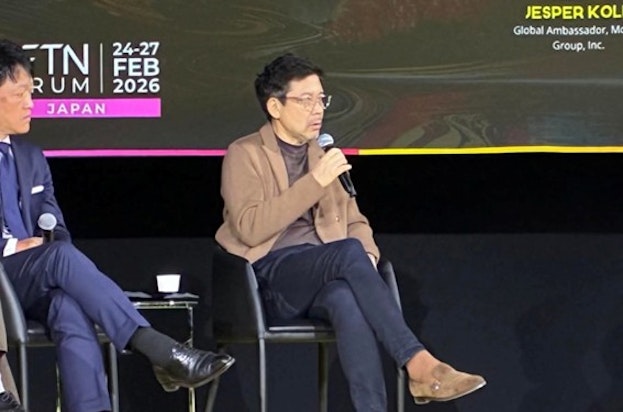
What I emphasized during the panel discussion was the transformation taking place among Japan’s major corporations. MUIP currently manages a $600 million corporate venture capital (CVC) fund and has invested in over 60 global startups.
A symbolic example of this trend is MUFG Bank’s acquisition last year of MoneyTree, a company in which we have invested.MoneyTree is a Japan-based startup we invested in back in 2019, founded by a foreign national. It is a new trend—unthinkable in the past—for a bank to acquire a startup and integrate its technology internally. The MUFG Group has also acquired several other startups, including Kanmu and WealthNavi (which became a subsidiary via a tender offer after its IPO).
(For articles related to Kanmu: Insert Insight articles related to Kanmu here)
(Click here for articles on MoneyTree: Insert relevant MoneyTree articles from Insight)
Furthermore, MUFG recently acquired a 20% stake in India’s Shriram Finance. While M&A was once shunned in Japan, even the banking sector—considered the most conservative—has undergone such a transformation . This trend is likely to spread not only to global giants like Sony and Toyota but also to other Japanese companies.
Large corporations are adopting startup technologies to transform themselves—this trend is set to accelerate even further.
AI and Blockchain—Technologies That Will Transform the Future of Banking
In the latter half of the panel discussion on investment areas, what caught my attention most were AI and blockchain, particularly generative AI and stablecoins.
In this context, the points raised by Qin En Looi of Onigiri Capital were particularly insightful. He noted that while cryptocurrencies are highly volatile and not investment-grade for institutional investors, blockchain is a different story. He pointed out that security tokenization is an area where the benefits of blockchain can be leveraged without controversy, and his observation that capital controls in the Global South pose a barrier to scaling for stablecoins was spot-on.
MUFG has been implementing blockchain technology for over a decade and has also begun introducing agent AI. Regarding stablecoins, in light of regulatory trends in the U.S., they are becoming a critical technology for banks, and we see significant potential not only in the B2C sector but also in the B2B domain.
Imagine this scenario: Large corporations like Sony or Toyota hold funds in various currencies across the globe. While treasury management teams analyze optimal currency combinations daily, transferring funds and exchanging currencies incurs both costs and time. In the future, the integration of AI and stablecoins will likely enable real-time, fee-free fund transfers. Banks must prepare for this new era.
While the topics discussed during the panel were wide-ranging, the underlying common thread was a shared recognition that “the very nature of capital flows is changing.” As technologies such as AI, blockchain, and tokenization accelerate this transformation, the key to the future lies in new cross-border capital flows and striking a balance between regulation and innovation. I am convinced that facing technological evolution without fear and taking the lead in change is the mindset required of the financial sector moving forward.
